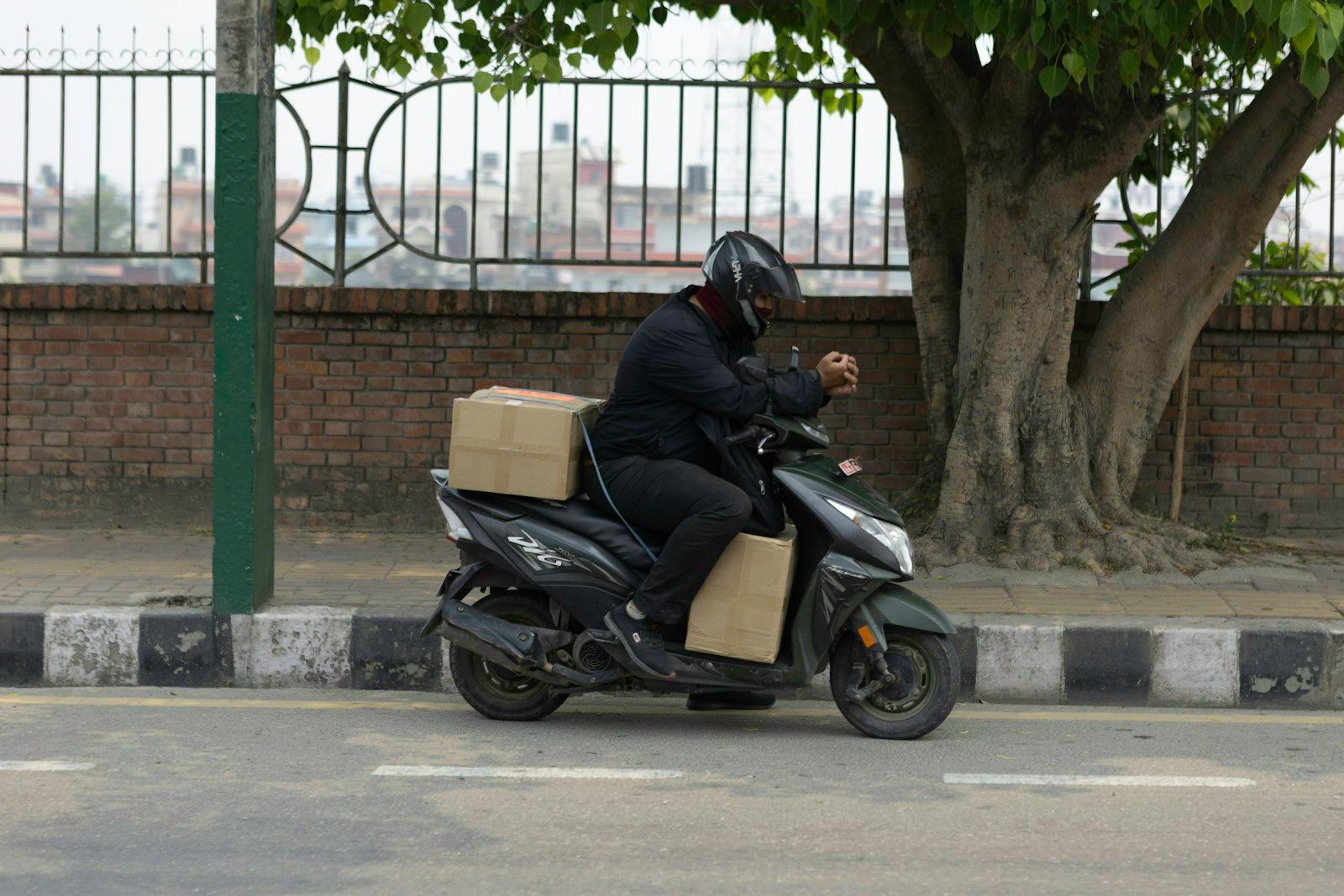
The parcel comes back on a Thursday afternoon. The courier tried twice; once nobody answered, and once the customer said they'd "changed their mind". You've paid to send it, you'll pay to get it back, and for the last six days that dress or phone case sat in a van instead of on your shelf, where someone else might have bought it.
That's a failed cash-on-delivery order, and if you sell online in South Asia it's probably your most expensive kind of order. This playbook is about how to reduce COD returns without doing the one thing most customers would punish you for: switching COD off.
Why you can't just drop cash on delivery
In Sri Lanka, cash on delivery is still how most online shoppers pay. The Digital Outlook Sri Lanka 2025 report by the Asia Pacific Institute of Digital Marketing and the University of Kelaniya found that 52% of online shoppers paid by COD, up from 48% the year before (Daily Mirror).
How Sri Lankan online shoppers pay
COD exists because it solves a trust problem. A first-time customer doesn't know you, and paying at the door means they don't have to. Remove it and you don't remove the doubt; you just lose the sale.
How much worse is COD, really?
The best public numbers come from India, where large sellers have to publish them. In its IPO prospectus, the marketplace Meesho reported that 22.3% of cash-on-delivery orders in FY25 went undelivered, against 2.7% of prepaid orders (ClickPost). Across D2C brands on its own network, logistics platform ClickPost measured a COD return-to-origin rate of 37.5% against 5.3% for prepaid.
22.3%
of Meesho's COD orders went undelivered in FY25
Meesho prospectus, via ClickPost
2.7%
of its prepaid orders went undelivered in the same year
Meesho prospectus, via ClickPost
8×
roughly how much more often a COD order fails
Our calculation from the figures above
Your numbers will be different, and that's the point: most sellers we speak to have never measured theirs. Before you change anything, count last month's COD orders and how many came back. That's your baseline.
Where failed COD orders come from
ClickPost also broke down why orders come back. The ranges below are typical shares of a brand's returns on its network. They overlap and don't add up to 100%, but the order is telling.
| Reason the order failed | Typical share of returns | What fixes it |
|---|---|---|
| Customer refused or couldn't pay | 28–38% | Confirming the order before it ships |
| Address problems (missing details, wrong area) | 18–26% | Better checkout fields and a confirmation call |
| Customer unreachable | 14–20% | Confirmed phone number, delivery-day message |
| Fake or prank orders | 6–12% | Confirmation, plus flags for repeat refusers |
| Courier failure | 5–10% | Measuring couriers by area and switching |
| Cancelled after dispatch | 4–8% | A cut-off: confirm before booking the courier |
| Product not as expected | 3–7% | Honest photos, sizes and descriptions |
Source: ClickPost, FY2026 network data from Indian D2C brands.
Look at the top four rows. Most failed COD orders were never going to succeed, and you could have found that out with one message before the parcel left.
The playbook
- 1
Confirm every COD order before booking the courier
Send the order summary (items, total, address, phone) and ask the customer to reply 'Confirm'. No reply within a day? Call once. Still nothing? Don't ship it. This single step tackles refusals, fake orders and cancellations after dispatch.
- 2
Fix the address at checkout, not at the door
Ask for a landmark, the nearest town, and a second phone number. In Sri Lanka especially, a house name and lane rarely get a parcel there on their own. Make the phone field validate the number format.
- 3
Tell the customer the day it's coming
A message on dispatch with the courier's name and tracking number, and another the morning of delivery: 'Your order is out today, please keep LKR 6,450 ready.' People who know the exact amount aren't surprised at the door.
- 4
Give people a reason to prepay, not a penalty for COD
A small discount or free delivery for paying online shifts some customers without losing the rest. For high-value items, a partial advance (for example, the delivery fee) filters out casual orders. Charging a COD fee works too, but it reads as a penalty, so test it.
- 5
Flag repeat refusers, kindly
Keep a note on customers who refused delivery before. Next time, ask them to prepay or confirm by phone. Keep it as an internal note, never a public list, and give people the benefit of the doubt for a genuine one-off.
- 6
Measure couriers by area
Track delivery success by courier and district. One courier may be excellent in Colombo and poor outside it. Splitting areas between couriers is often the cheapest improvement available.
- 7
Handle the failed attempt the same day
When the courier reports a failed delivery, contact the customer before the next attempt. A quick 'the rider couldn't reach you, is tomorrow okay?' saves a surprising number of orders.

The rule we give every client who sells on CODA COD order isn't an order until the customer confirms it. Until then, it's a request.
Making confirmation automatic
Step 1 is the most important and the easiest to forget on a busy day, which is exactly why it should be a rule, not a habit. Here's what that rule looks like in Ordavo, our order management product, using its When/If/Then automations and tested against a sample order before it goes live.
 Ordavo · Automation rule
Confirm COD orders before dispatch
When a new order is created, from any channel
If payment method is Cash on delivery
And the order total is over LKR 5,000, or the customer has refused a delivery before
Then set the stage to Awaiting confirmation (courier can't be booked yet)
And assign it to the order desk with a note: confirm items, total and address
And keep the stock held so it isn't sold twice while you wait
Test on ORD-1072 (no real order touched)
- Payment method is Cash on delivery (passed)
- Customer refused a delivery in March (passed)
- Order total LKR 3,900 (under LKR 5,000) (failed)
Rule matches: one 'or' condition is enough. ORD-1072 moves to Awaiting confirmation.
Start with a threshold that suits your margins. Some sellers confirm every COD order; others only confirm above a certain value or for new customers. The important part is that the courier can't be booked until someone has said yes.
If confirmation happens on WhatsApp, our guide to WhatsApp order management covers the standard confirmation message in detail. And holding stock while you wait matters more than it seems: we explained why in selling on several channels without overselling.
What to track every month
Your COD dashboard, in six numbers
- COD share of orders (are you slowly shifting customers to prepaid?)
- COD orders confirmed vs. unconfirmed before dispatch
- Return-to-origin rate for COD, and separately for prepaid
- Failed deliveries by reason: refused, unreachable, address, courier
- Delivery success by courier and by district
- Cost of failed orders: both courier legs plus the days stock was tied up
None of this needs special software at first; a spreadsheet will do for a few dozen orders a week. Once confirmation, stock and courier booking live in three different places, though, the steps start getting skipped, which is usually the moment people realise they've outgrown spreadsheets for orders.
Want help working out what failed deliveries are costing you? Send us last month's numbers and we'll help you find the biggest leak.